
Culture Shift: Remote Work vs. Office Life in 2026 and beyond
Balancing remote work and office presence in the legal industry is uniquely challenging. Lawyers need quiet focus for research and drafting, yet in-person collaboration strengthens team culture and building a strategy.
As long-standing proponents of flexible work, Obelisk Support conducted a survey in November 2025, asking 85 in-house lawyers in the UK questions on their working culture and how the shift between remote and on-site work has impacted their work. We wanted to assess how different working models are influencing productivity, collaboration, and—most critically— workplace culture.
As legal departments continue to adapt following the pandemic, the findings provide a timely snapshot of what is working, what is not, and what may lie ahead for 2026 and beyond.
%
of legal teams work Hybrid-Office-First
The way legal teams work has changed for good
The most robust finding was that remote work is now firmly embedded in the way legal teams operate in the UK. Among respondents, 42% reported working in a hybrid office-first model, where the office remains the primary workplace but remote work is permitted. A further 27% described their organisations as hybrid remote-first, while 17% stated that their legal teams are fully remote.
What best describes your team’s current working model?
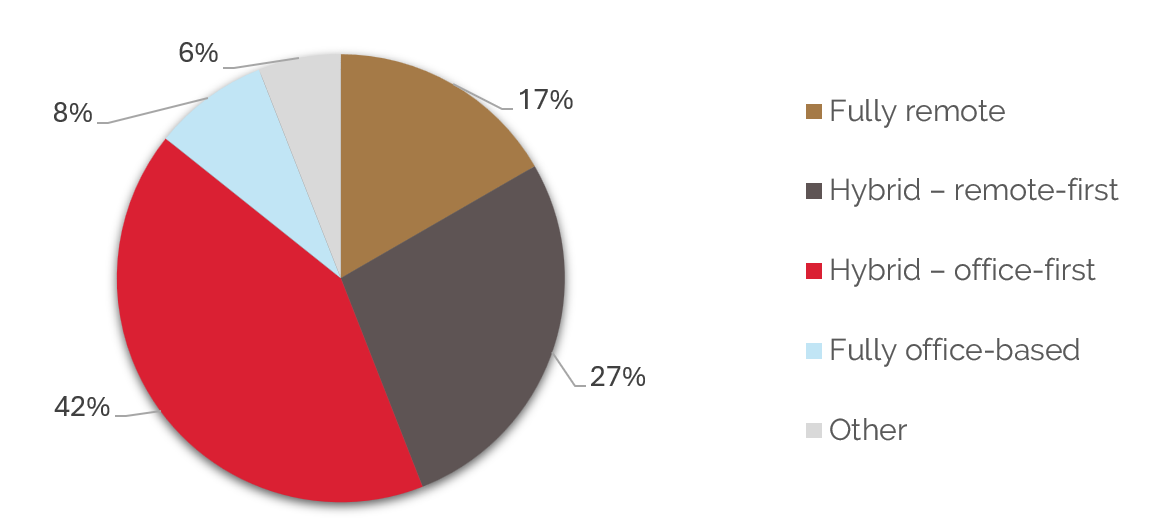
Taken together, these figures indicate that 86% of legal teams now incorporate some form of remote working. This represents a significant shift from pre-pandemic norms, where legal work was overwhelmingly office-based. What began as an emergency response has evolved into a long-term structural change in how legal services are delivered internally.
This suggests that the pandemic has had a lasting impact on legal working practices, one that is likely to persist indefinitely. While organisations continue to refine their approaches, few appear willing to revert to fully office-based models, signalling broad acceptance of remote and hybrid work as viable—and often desirable—options.
%
of organisations do not monitor remote workers
Working remotely has impacted team culture
Despite its popularity, remote work presents clear cultural challenges. The most frequently cited issue, identified by 48% of respondents, was maintaining team culture. Closely related, 44% reported that remote working has hindered team cohesion and the sense of connection within legal departments.
Do you believe remote working has helped or hindered team cohesion and culture?
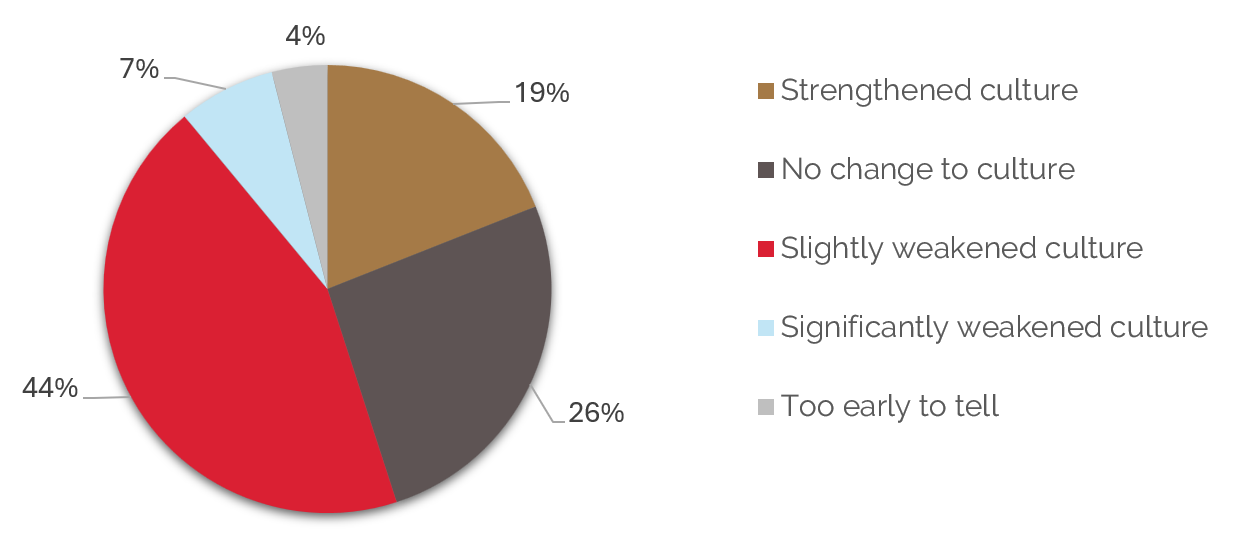
These challenges may be felt most acutely by lawyers who have entered the workforce more recently. Junior lawyers often rely on informal interactions, observation, and in-person mentorship to develop professional judgement and interpersonal skills. By contrast, more senior lawyers typically had the opportunity to build these foundations earlier in their careers within traditional office environments.
This highlights the importance of investing in the right tools, communication practices, and technology infrastructure. Without intentional efforts to foster connection, knowledge sharing, and collaboration, remote and hybrid models risk weakening the cultural fabric that supports high-performing legal teams.
%
of resppndents said that remote work has improved their personal work/life balance
Personal preferences
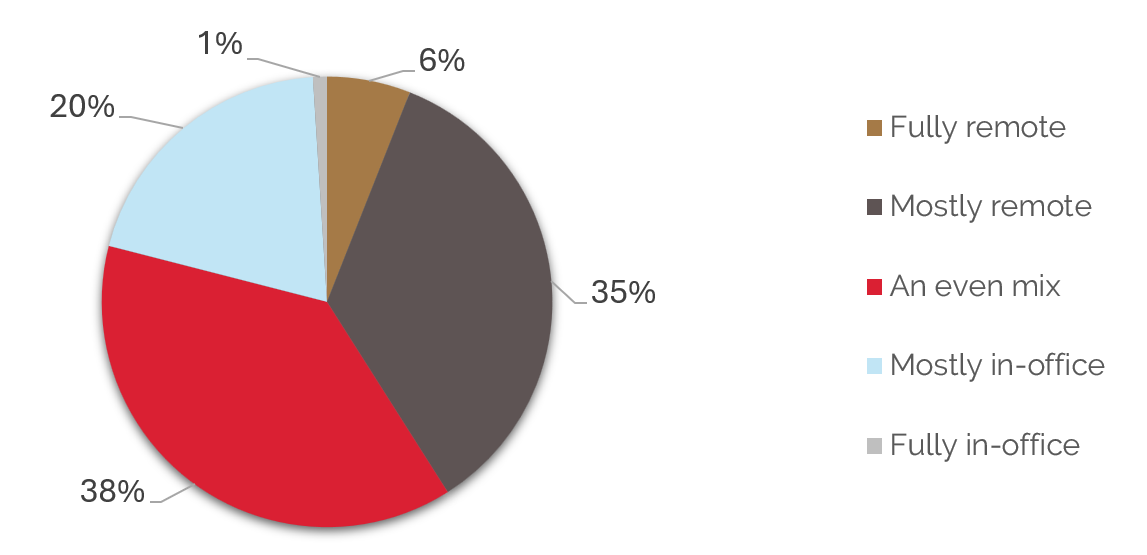
Notwithstanding these concerns, personal preferences strongly favour flexibility. An overwhelming 79% of respondents indicated that they want some form of remote work to remain part of their working arrangements. For many, the benefits are clear and tangible.
What is the single biggest benefit you’ve experienced from remote or hybrid working?
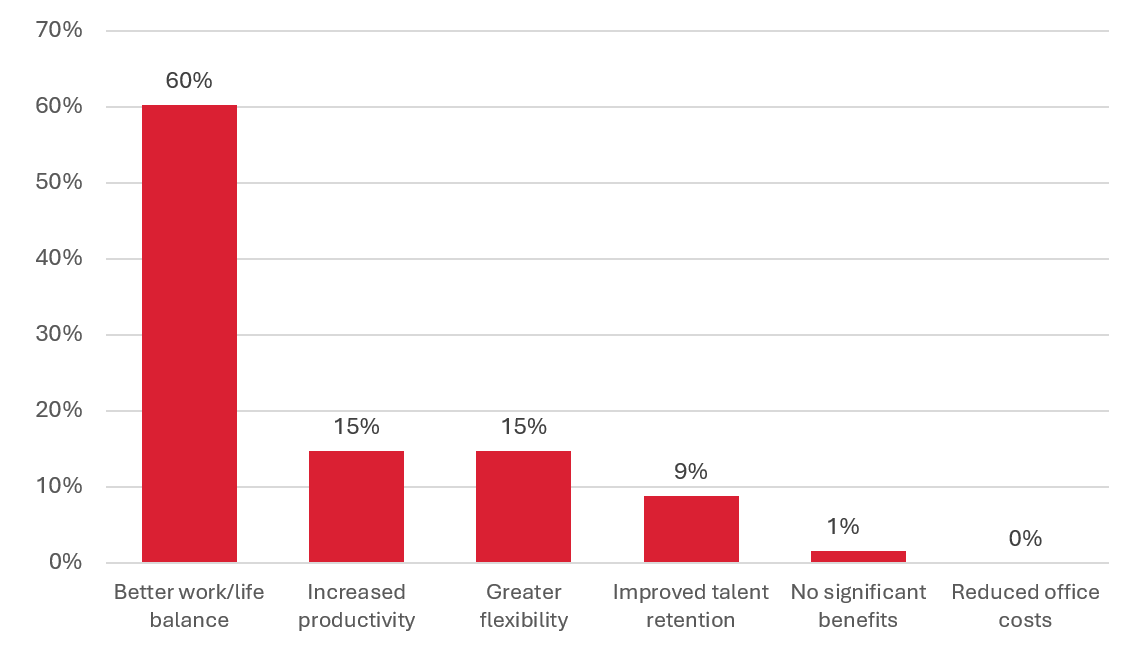
The most commonly cited advantage was improved work/life balance, selected by 60% of respondents. Reduced commuting time, greater autonomy over working hours, and the ability to better manage personal commitments were all highlighted as meaningful improvements to quality of life.
Hybrid working models appear to offer the greatest appeal, balancing flexibility with opportunities for in-person collaboration. This aligns with findings from the American Bar Association’s Practice Forward survey, which shows that lawyers value the ability to choose when they work from the office and when they work from home, rather than being constrained by rigid policies.
Do you personally prefer working remotely, in the office, or a mix of both?
2026 and Beyond
Looking at 2026, in house counsel who contributed shared a wide range of thoughtful suggestions on how remote, hybrid, and in-office work could be improved in the years to come. These ideas reflect a growing recognition that the question is no longer whether flexible work should exist, but how it can be optimised.
Many comments focused on the need for clearer expectations, better use of technology, and more intentional approaches to collaboration and mentoring. Others highlighted the importance of rethinking office spaces to make in-person time more purposeful and valuable.